Tree Pruning in Westhoughton
Tree surgeon work for gardens: careful pruning and tree trimming that keeps your trees healthy, tidy and the right size, with council checks handled before a single cut. Around six miles from our Leigh base.
Tree Pruning for Westhoughton Gardens
The mature gardens around Wingates and Westhoughton’s older streets carry some sizeable trees, and a tree that made sense forty years ago can end up stealing the light, dropping limbs over the shed or crowding the neighbours. We reduce, thin, shape and crown-lift trees across the town, always cutting to growth points so the tree recovers cleanly and keeps a natural outline.
We cover Westhoughton and the surrounding area: Wingates, Daisy Hill, Chequerbent, Chew Moor, Hart Common and beyond (BL5).
Get a Free Westhoughton Quote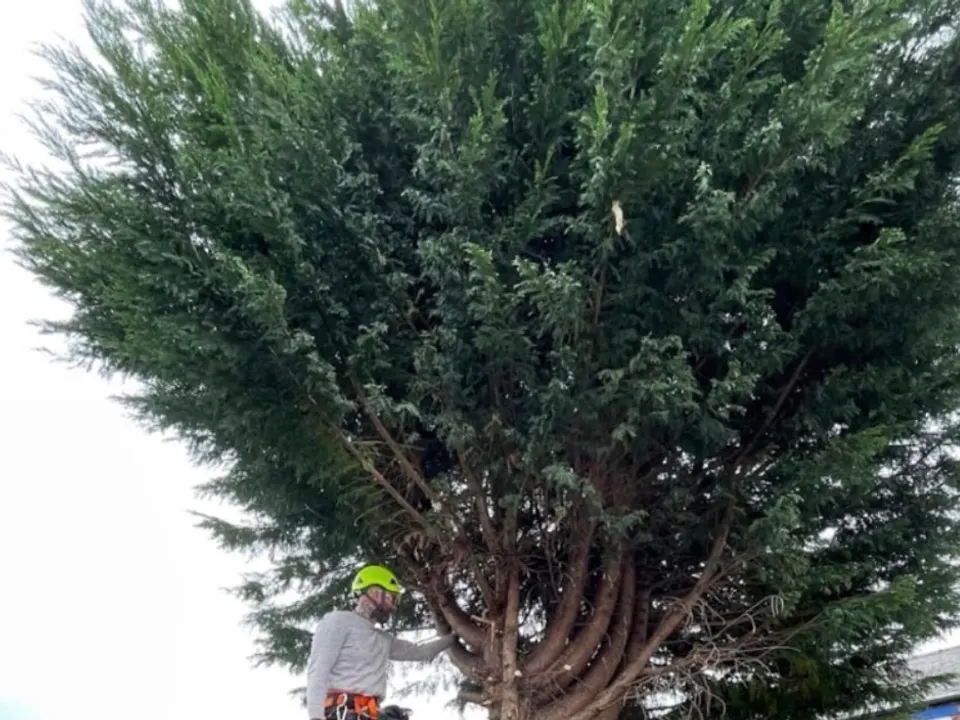
What’s Included
Before any significant work we check the paperwork. Some Westhoughton trees carry Tree Preservation Orders, and Bolton Council’s consent is needed before touching those. Working on a protected tree without it is an offence that lands on the owner. The check takes minutes, and we’ll do it for you as part of the quote.
- Crown reduction, thinning, lifting and deadwooding
- Tree trimming, reshaping and pollarding for overgrown or lopsided trees
- Fruit tree pruning for health and cropping
- Small tree felling, removal and taking the stump out
- TPO and conservation area checks with the council
- All branches and green waste taken away
How It Works
Tree Pruning in Westhoughton, FAQs
Bolton Council keeps the records, and we can check for you before quoting. If the tree is protected, work needs the council’s consent first. We’ll help with the application rather than leave you to sort it.
Legally you can remove growth back to your boundary line (as long as the tree isn’t protected), and we do this regularly in Westhoughton. We’ll cut it properly so the tree stays healthy, and it’s always worth a friendly word with the neighbour first.
For most deciduous trees it’s late autumn to late winter, while the tree is dormant. There are exceptions. Cherries and plums should be pruned in summer to avoid silver leaf disease, and we avoid disturbing trees with nesting birds. We’ll tell you the right window for your tree when we quote.
Crown reduction makes the whole tree smaller by cutting back to lower growth points, keeping a natural shape. Crown thinning keeps the tree the same size but removes selected branches so more light and wind pass through. Thinning is often the answer when the real problem is shade, not size.
As a rule of thumb, no more than about a third of the live crown in a single season. Cutting harder than that stresses the tree and triggers a mess of weak, fast regrowth. If a tree needs a big reduction, it’s often better done in stages a year or two apart. We’ll advise on what the tree can take.