
Driveways in Salford
Block paving driveways dug out to the depth a car actually needs, laid on a compacted sub-base with edge courses that lock under turning wheels, and drained within your own boundary so you stay inside permitted development. Around nine miles from our Leigh base.
Driveways for Salford Gardens
Front garden driveways are popular on the semi-detached streets of Swinton and Clifton, where a 1930s frontage often has just enough room for a car once the old lawn or border comes out. We lay block paving in a herringbone bond with a contrasting edge course, a pattern that locks under the weight and turning of a vehicle and gives the front of the house a clean, finished line.
We cover Salford and the surrounding area: Swinton, Pendlebury, Clifton, Eccles, Monton and beyond (M27, M28, M30, M6).
Get a Free Salford Quote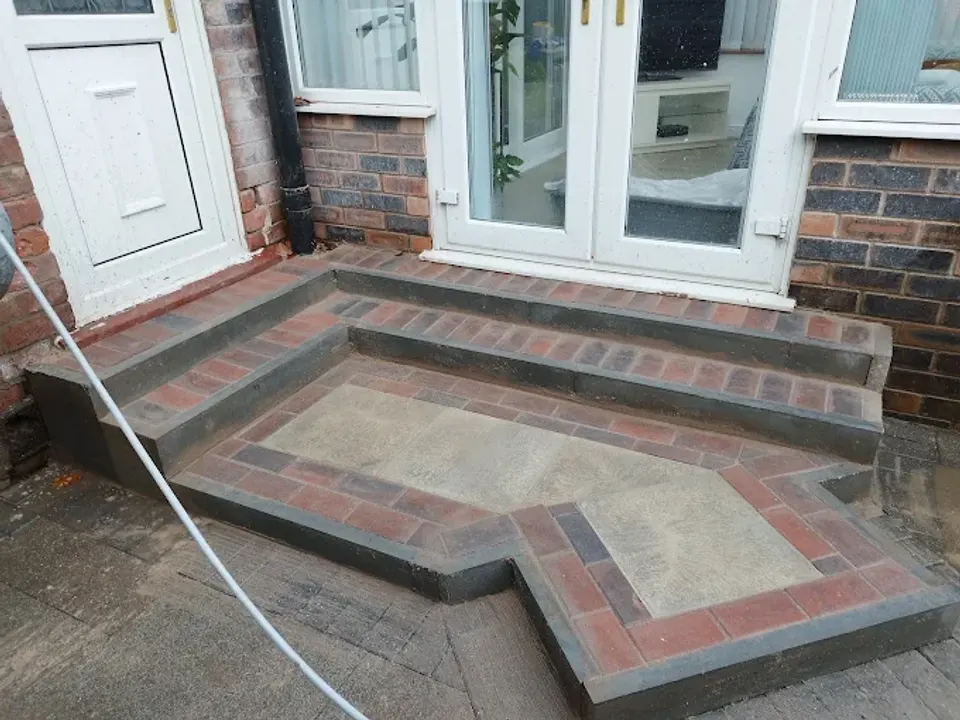
What’s Included
A drive needs a deeper dig and a thicker, well-compacted sub-base than any patio because it carries a car every day. We build the drainage into the plot, either a permeable surface or a fall to a border or soakaway within your boundary, which is what keeps a front drive inside permitted development rather than tipping water onto the road.
- Block paving and paved driveways, laid to pattern
- Dug out to the depth a driveway needs for vehicle weight
- Compacted MOT Type 1 sub-base built up in layers
- Herringbone and edge courses that lock under turning wheels
- Drainage kept within your boundary, no planning headache
- Old drives broken out and carted away
How It Works
Driveways in Salford, FAQs
The paving itself is normally permitted development as long as it’s permeable or drains to a lawn or border within your boundary, which is how we build every drive. A new dropped kerb across the footway is a separate application to Salford City Council, and we’ll point you at the process.
Yes, block paving comes in plenty of tones and we can pick a colour and a border that sits comfortably with an older Monton or Irlams o’ th’ Height frontage rather than fighting it. The herringbone laying pattern and a neat edge course keep it looking deliberate.
It depends on the size, the access and what we find when we dig, because the excavation and sub-base are a fair chunk of the price whatever blocks go on top. We price per job rather than a blanket rate per square metre, since a tight drive with awkward access costs more per metre than a big open one, so you get an exact written figure after a free site visit before anything starts.
Deeper than a patio, because it carries cars rather than a table and chairs. We dig out past the topsoil into firm ground, then build back up with a compacted MOT Type 1 sub-base thick enough for the load, laid and whacked in layers rather than in one go. The exact depth depends on the ground we uncover, which is why we check it on the site visit.
Only if the base is skimped. Ruts and dips come from a thin or badly compacted sub-base, or from missing edge restraints that let the blocks creep. Dug to depth, compacted in layers and locked in with concrete edge courses, a block drive stays flat under daily use. If you’ve already got a sunken drive, we can often lift the affected area and relay it on a fresh base.