
Driveways in Newton-le-Willows
Block paving driveways dug out to the depth a car actually needs, laid on a compacted sub-base with edge courses that lock under turning wheels, and drained within your own boundary so you stay inside permitted development. Around five miles from our Leigh base.
Driveways for Newton-le-Willows Gardens
Newton-le-Willows is a commuter town, and parking near the stations at Newton and Earlestown is at a premium, so turning a front garden into off-street parking is one of the smartest moves you can make on a plot here. A block paved drive gives you a space of your own and finishes the front of a new-build that came with bare turf.
We cover Newton-le-Willows and the surrounding area: Earlestown, Wargrave, Vulcan Village, Newton in Makerfield, Tayleur Leas and beyond (WA12).
Get a Free Newton-le-Willows Quote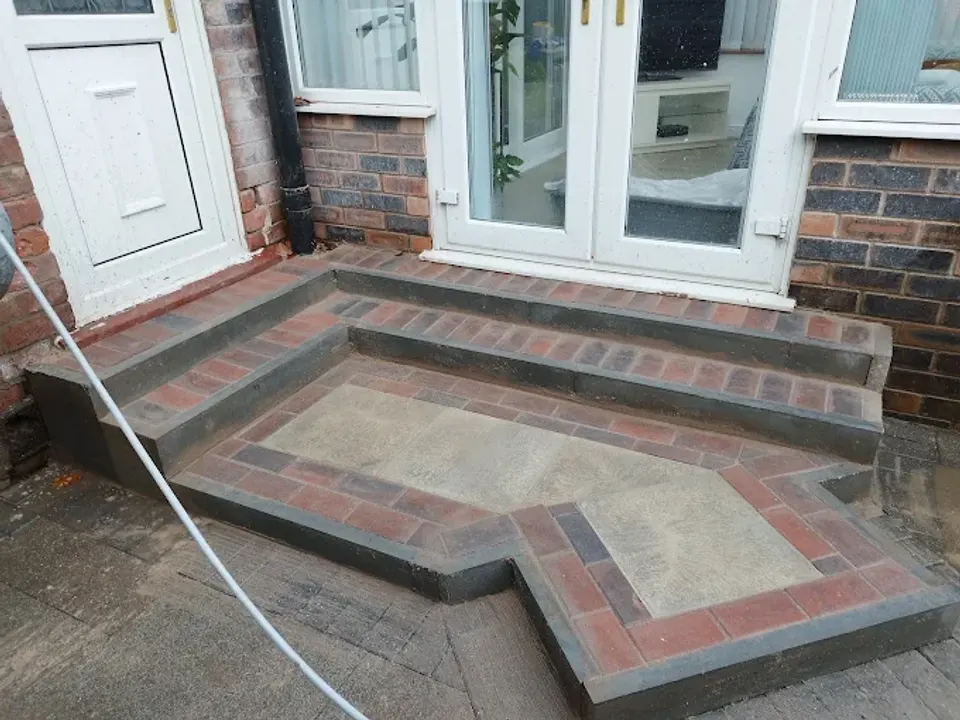
What’s Included
We lay block paving herringbone with a contrasting edge, the layout that holds firm under a car rather than spreading. New estate ground is often compacted subsoil over buried rubble, so we dig out properly, clear what the builders left and compact a thick sub-base before laying. Drainage is kept within your boundary to a soakaway, which keeps the drive inside permitted development.
- Block paving and paved driveways, laid to pattern
- Dug out to the depth a driveway needs for vehicle weight
- Compacted MOT Type 1 sub-base built up in layers
- Herringbone and edge courses that lock under turning wheels
- Drainage kept within your boundary, no planning headache
- Old drives broken out and carted away
How It Works
Driveways in Newton-le-Willows, FAQs
The paved surface is permitted development as long as it drains within your own boundary, which we build in. Two things to watch on a modern estate: a dropped kerb across the pavement needs St Helens Borough Council approval, and some developers put covenants on front gardens for the first few years.
Not if the groundwork’s done right. The trouble on new plots is compacted fill and buried hardcore, so we excavate past it and build up a proper stone sub-base rather than laying straight onto site ground. That’s what stops a drive rutting and settling later.
It depends on the size, the access and what we find when we dig, because the excavation and sub-base are a fair chunk of the price whatever blocks go on top. We price per job rather than a blanket rate per square metre, since a tight drive with awkward access costs more per metre than a big open one, so you get an exact written figure after a free site visit before anything starts.
Deeper than a patio, because it carries cars rather than a table and chairs. We dig out past the topsoil into firm ground, then build back up with a compacted MOT Type 1 sub-base thick enough for the load, laid and whacked in layers rather than in one go. The exact depth depends on the ground we uncover, which is why we check it on the site visit.
Only if the base is skimped. Ruts and dips come from a thin or badly compacted sub-base, or from missing edge restraints that let the blocks creep. Dug to depth, compacted in layers and locked in with concrete edge courses, a block drive stays flat under daily use. If you’ve already got a sunken drive, we can often lift the affected area and relay it on a fresh base.