
Turfing in Lowton
New lawns and turf laying done properly. Full ground preparation, quality topsoil and fresh cultivated turf that roots in and stays green. Around three miles from our Leigh base.
Turfing for Lowton Gardens
Turfing in Lowton falls into two piles. The first is new-build rescue: lawns on the recent estates that yellowed, sank or waterlogged within a year or two because the turf went down on compacted subsoil with barely any topsoil. We strip them, break up the ground, bring in proper soil and re-lay so it doesn’t happen twice.
We cover Lowton and the surrounding area: Lane Head, Lowton St Mary’s, Lowton Common, Lowton Village, Byrom and beyond (WA3).
Get a Free Lowton Quote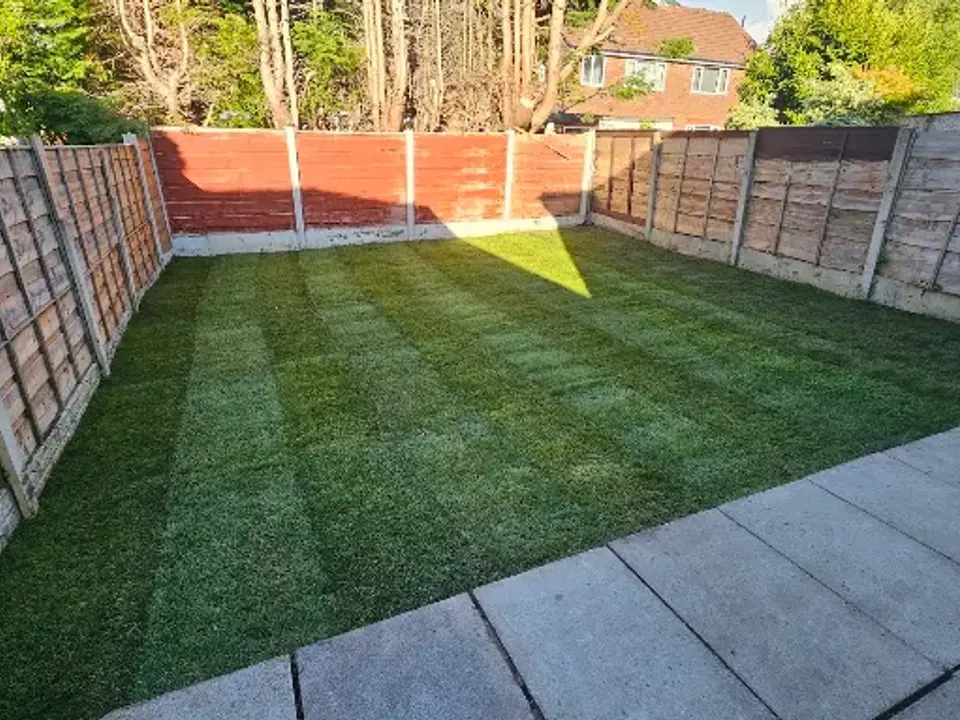
What’s Included
The second is the older gardens, tired lawns around Lowton St Mary’s and the Common, full of moss and bare patches, where decades of use have worn the grass out. A full re-turf with the ground prepared correctly underneath transforms these gardens faster than anything else we do.
- Full ground preparation: old lawn stripped, ground rotavated and levelled
- Screened topsoil supplied and graded to the right depth
- Fresh cultivated lawn turf, laid the day it’s delivered
- Failed new-build lawns dug out and relaid properly
- Edges trimmed cleanly around beds, paths and patios
- Clear watering and aftercare advice so the lawn takes
How It Works
Turfing in Lowton, FAQs
Almost always. The cause is nearly always compaction and buried rubble under the builder’s turf, not the grass itself. We sort the ground first, then lay fresh cultivated turf on top. That’s the fix.
Give it three to four weeks of light footfall while it roots in, longer for heavy use. We leave you clear watering and mowing instructions, and you can always ring us if something doesn’t look right.
You’ll see turf quoted online at so much per square metre, but that’s just for the turf itself. The real price depends on the size of the lawn and how much ground work is needed. A simple returfing job over decent soil costs a lot less than digging out a failed lawn and importing topsoil. We quote per job after a free site visit, so you get an exact written price before anything starts.
Spring and autumn are ideal, because the ground is warm and there’s usually enough rain to help the turf root. That said, turf can be laid most of the year as long as the ground isn’t frozen. Summer laying is fine too. It just needs a strict watering routine while it establishes.
Daily for the first couple of weeks, and twice a day in hot, dry weather. Water enough to soak through the turf into the soil beneath, not just wet the surface. Once the turf has rooted you can ease off, and an established lawn rarely needs watering at all in a normal British summer.