
Turfing in Culcheth
New lawns and turf laying done properly. Full ground preparation, quality topsoil and fresh cultivated turf that roots in and stays green. Around five miles from our Leigh base.
Turfing for Culcheth Gardens
Plenty of Culcheth lawns have been down for fifty years or more, and eventually even a well-kept lawn reaches the point where renovating it costs more effort than replacing it. We strip the old surface, correct the levels, improve the soil and lay fresh cultivated turf, a new lawn in days, established in weeks.
We cover Culcheth and the surrounding area: Twiss Green, Wigshaw, Fowley Common, Newchurch, Glazebury and beyond (WA3).
Get a Free Culcheth Quote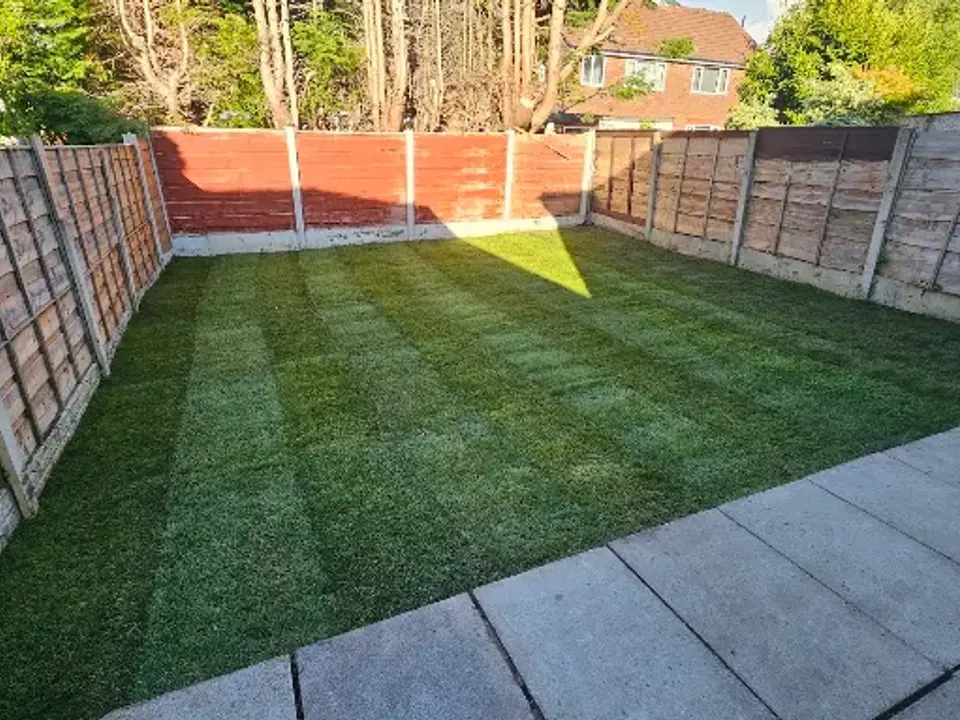
What’s Included
Big lawns are the norm here rather than the exception, and preparation matters more as the area grows: hollows, humps and drainage problems all get magnified across a large lawn. We put the time into the ground work so the finished lawn is level, green and mows evenly from edge to edge.
- Full ground preparation: old lawn stripped, ground rotavated and levelled
- Screened topsoil supplied and graded to the right depth
- Fresh cultivated lawn turf, laid the day it’s delivered
- Failed new-build lawns dug out and relaid properly
- Edges trimmed cleanly around beds, paths and patios
- Clear watering and aftercare advice so the lawn takes
How It Works
Turfing in Culcheth, FAQs
Yes, larger lawns are routine for us in Culcheth. The job is planned so the turf is laid the day it arrives, whatever the size, because turf sitting rolled on a pallet deteriorates fast.
Keep off it for around three to four weeks while it roots in, watering well in dry spells. First cut comes once the turf can’t be lifted at the corners. We leave clear aftercare notes with every lay.
You’ll see turf quoted online at so much per square metre, but that’s just for the turf itself. The real price depends on the size of the lawn and how much ground work is needed. A simple returfing job over decent soil costs a lot less than digging out a failed lawn and importing topsoil. We quote per job after a free site visit, so you get an exact written price before anything starts.
Spring and autumn are ideal, because the ground is warm and there’s usually enough rain to help the turf root. That said, turf can be laid most of the year as long as the ground isn’t frozen. Summer laying is fine too. It just needs a strict watering routine while it establishes.
Daily for the first couple of weeks, and twice a day in hot, dry weather. Water enough to soak through the turf into the soil beneath, not just wet the surface. Once the turf has rooted you can ease off, and an established lawn rarely needs watering at all in a normal British summer.