
Turfing in Newton-le-Willows
New lawns and turf laying done properly. Full ground preparation, quality topsoil and fresh cultivated turf that roots in and stays green. Around five miles from our Leigh base.
Turfing for Newton-le-Willows Gardens
If there’s one job Newton-le-Willows was built to generate, it’s replacing failed builder lawns. The town has grown fast, and on new estates the turf is often laid straight onto ground that spent a year being driven over by site machinery, thin topsoil, compacted subsoil, buried rubble. It looks fine at handover and it’s struggling by the second summer.
We cover Newton-le-Willows and the surrounding area: Earlestown, Wargrave, Vulcan Village, Newton in Makerfield, Tayleur Leas and beyond (WA12).
Get a Free Newton-le-Willows Quote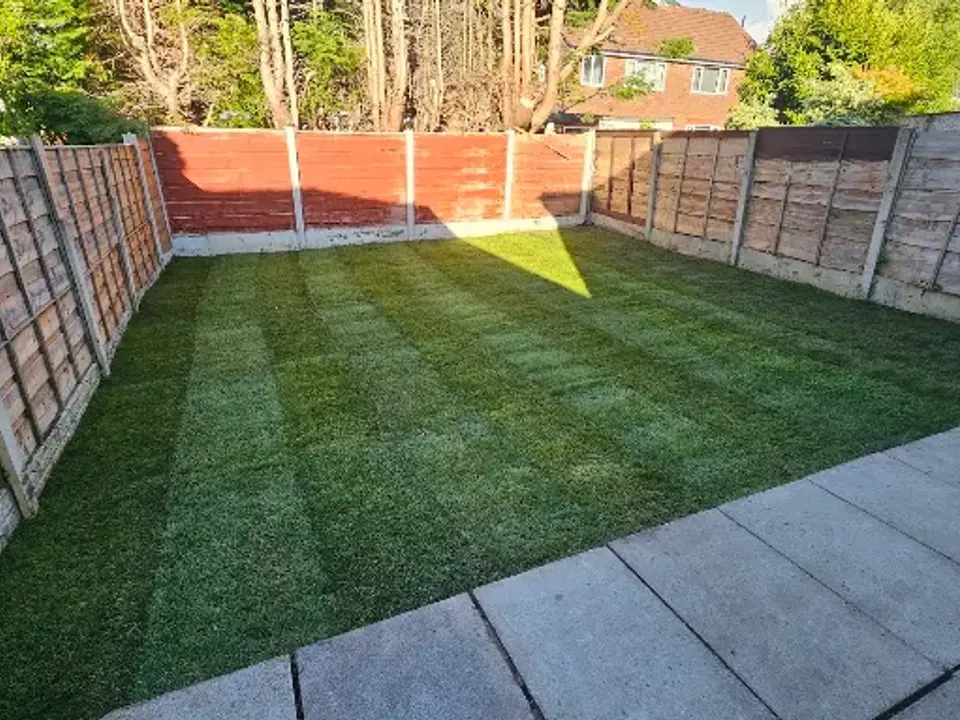
What’s Included
The fix is in the ground, not the grass. We strip the failed lawn, break up the compaction, pull out whatever the builders buried, bring in proper topsoil and lay fresh cultivated turf on a bed that actually lets roots get down. Older lawns get the same care. Tired, mossy grass in Wargrave or off the High Street lifts and relays just as well.
- Full ground preparation: old lawn stripped, ground rotavated and levelled
- Screened topsoil supplied and graded to the right depth
- Fresh cultivated lawn turf, laid the day it’s delivered
- Failed new-build lawns dug out and relaid properly
- Edges trimmed cleanly around beds, paths and patios
- Clear watering and aftercare advice so the lawn takes
How It Works
Turfing in Newton-le-Willows, FAQs
Almost always compaction. Site machinery squeezes the air out of the subsoil, the developer spreads an inch or two of soil over the top, and water has nowhere to go. Relaying turf on the same ground fails the same way. The ground has to be opened up and rebuilt first.
Usually, yes. Some of the newer plots are handed over with awkward falls across the lawn area. We can regrade, retain where needed and turf a level, usable lawn. We’ll talk through the options at the quote.
Spring and autumn are ideal, because the ground is warm and there’s usually enough rain to help the turf root. That said, turf can be laid most of the year as long as the ground isn’t frozen. Summer laying is fine too. It just needs a strict watering routine while it establishes.
Daily for the first couple of weeks, and twice a day in hot, dry weather. Water enough to soak through the turf into the soil beneath, not just wet the surface. Once the turf has rooted you can ease off, and an established lawn rarely needs watering at all in a normal British summer.
Keep off it for around three weeks, until the roots have knitted into the soil. A gentle tug on a corner tells you. If it lifts, it needs longer. If it holds firm, it’s rooted. The first cut comes once it’s established, with the mower on a high setting.