
Turfing in Leigh
New lawns and turf laying done properly. Full ground preparation, quality topsoil and fresh cultivated turf that roots in and stays green. Our home base.
Turfing for Leigh Gardens
A new lawn transforms a garden faster than almost anything else, and turfing is one of our most-booked jobs in Leigh. We strip out the old tired grass, prepare the ground properly, levelled, firmed and pre-turf fertilised, and lay fresh cultivated turf that knits in within weeks.
We cover Leigh and the surrounding area: Pennington, Westleigh, Higher Folds, Plank Lane, Bedford and beyond (WN7).
Get a Free Leigh Quote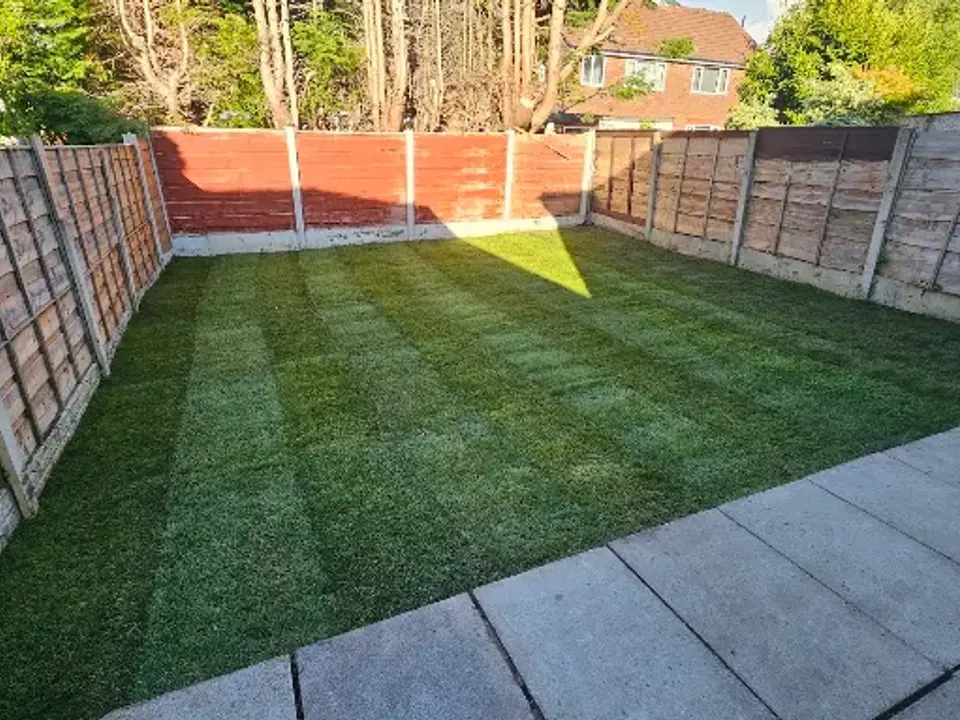
What’s Included
Leigh’s new-build estates keep us especially busy: developers often lay turf straight onto compacted subsoil, and it fails within a year or two. We fix that properly, with real topsoil and real preparation, so the replacement lawn actually lasts.
- Full ground preparation: old lawn stripped, ground rotavated and levelled
- Screened topsoil supplied and graded to the right depth
- Fresh cultivated lawn turf, laid the day it’s delivered
- Failed new-build lawns dug out and relaid properly
- Edges trimmed cleanly around beds, paths and patios
- Clear watering and aftercare advice so the lawn takes
How It Works
Turfing in Leigh, FAQs
Autumn and spring are ideal. The ground is warm and moist, so the turf roots quickly. We lay year-round except during frost or drought, and we’ll advise honestly if it’s worth waiting a few weeks.
Yes, it’s one of our most common Leigh jobs. Builder-laid turf often sits on compacted subsoil full of rubble. We strip it, sort the ground underneath, add proper topsoil and re-turf. Done right, it won’t fail twice.
You’ll see turf quoted online at so much per square metre, but that’s just for the turf itself. The real price depends on the size of the lawn and how much ground work is needed. A simple returfing job over decent soil costs a lot less than digging out a failed lawn and importing topsoil. We quote per job after a free site visit, so you get an exact written price before anything starts.
Keep off it for around three weeks, until the roots have knitted into the soil. A gentle tug on a corner tells you. If it lifts, it needs longer. If it holds firm, it’s rooted. The first cut comes once it’s established, with the mower on a high setting.
It can, as long as the turf suits the spot. For a lawn under trees or up against a north-facing fence we use a shade-tolerant turf with more fescue in it, which copes with less sun than a standard lawn. Bare, mossy patches in shade are often down to thin soil and poor drainage as much as the light, so we sort the ground while we are at it.