
Hedge Trimming in Newton-le-Willows
Sharp, tidy hedge cutting. Hedges shaped, reduced or rescued, with every scrap of green waste taken away. Around five miles from our Leigh base.
Hedge Trimming for Newton-le-Willows Gardens
Newton-le-Willows’ hedges live mostly in its older half. Privet fronts the Victorian terraces around Earlestown, and the established gardens of Wargrave and the High Street end carry mature laurel, beech and conifer that all want cutting on a schedule before they get away. Once a hedge has gone over, the price of putting it right jumps. Regular trims are the cheap option.
We cover Newton-le-Willows and the surrounding area: Earlestown, Wargrave, Vulcan Village, Newton in Makerfield, Tayleur Leas and beyond (WA12).
Get a Free Newton-le-Willows Quote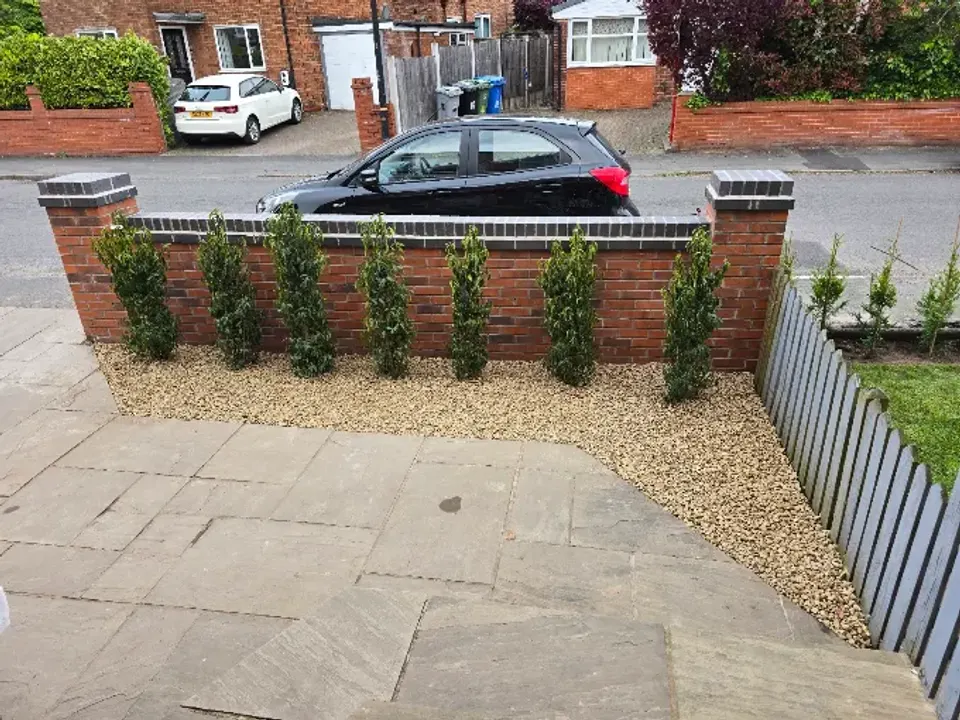
What’s Included
On the new estates the story is the opposite: young hedges planted for privacy on open plots, which need light, well-timed formative cuts to thicken up rather than shoot skywards with bare legs. We handle both ends of that spectrum, and every scrap of green waste leaves with us.
- Hedge cutting, shaping and regular maintenance trims
- Height and width reductions, including conifer reduction
- Overgrown hedge rescues and removals
- Conifer, leylandii, privet, laurel, beech, box and yew
- Nesting bird checks before every cut
- All green waste removed and disposed of
How It Works
Hedge Trimming in Newton-le-Willows, FAQs
Your deeds and plot plan will say. On modern estates each boundary is usually assigned to one plot. Whoever owns it, we only cut a neighbour’s side with their go-ahead, which is usually easy to get when the result is a tidier hedge for both of you.
Usually, yes. Young hedges on new plots often get left to gain height and end up leggy. Trimming the top and sides earlier than feels natural pushes growth into the base, so the hedge thickens into a proper screen instead of a row of lollipops.
Yes, but carefully. It’s an offence under the Wildlife and Countryside Act to damage or destroy an active bird’s nest, and the main nesting season runs from March to August. Hedge cutting isn’t banned in those months, but the hedge has to be checked first. We inspect before every cut, and if we find an active nest we’ll leave that section and come back once the birds have fledged.
Height can usually come down a long way, and topping a tall leylandii to bring it back under control is no bother, but the sides are the limit. Conifers and leylandii won’t regrow from brown wood, so cutting the faces back too hard leaves permanent bare patches. We’ll look at the hedge and tell you straight what a conifer reduction will achieve, and if removal and replanting is honestly the better option, we’ll say so.
Yes. Green waste removal is included in every hedge cutting quote. Clippings, trimmings and any larger branches are cleared, loaded and disposed of properly, and we sweep up before we leave.