
Decking in Newton-le-Willows
Timber and composite decking supplied and fitted: raised decks, steps and balustrades built on solid subframes that stay level, safe and dry underneath. Around five miles from our Leigh base.
Decking for Newton-le-Willows Gardens
Newton-le-Willows has grown fast, and the new estate gardens come with two familiar features: not much space and ground the site machinery flattened. Decking answers both. It makes a small garden feel bigger by giving it one generous level, and it spans the compacted ground rather than fighting it with a spade. We build timber and composite decks across WA12, from Wargrave to the newest phases.
We cover Newton-le-Willows and the surrounding area: Earlestown, Wargrave, Vulcan Village, Newton in Makerfield, Tayleur Leas and beyond (WA12).
Get a Free Newton-le-Willows Quote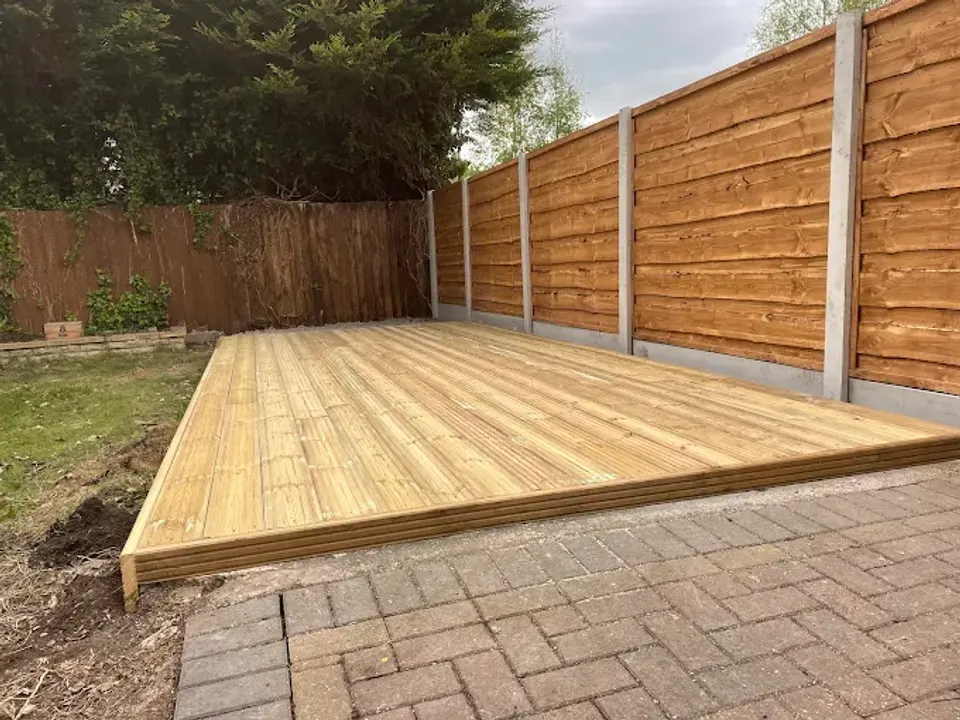
What’s Included
A typical estate deck here runs off the french doors and squares the garden up: frame on pads, membrane, airflow, then boards with a step down to the lawn. Composite is the popular pick for busy households, but we price timber alongside it every time so you choose with the numbers in front of you.
- Treated timber decking, supplied and fitted
- Composite decking in a range of colours and finishes
- Raised and split-level decks for sloped gardens
- Steps, balustrades and handrails built in
- Solid subframes with membrane and airflow underneath
- Old decking removed and taken away
How It Works
Decking in Newton-le-Willows, FAQs
Yes. Buried hardcore that makes turfing a misery barely matters to a deck, because we only excavate the pad positions. It is one of the few times that builder backfill works in your favour.
Done right, the opposite. One clean level with a straight step down reads bigger than a garden chopped into path, slab and scruffy lawn. Running the boards away from the house also stretches the eye down the garden.
It comes down to budget and appetite for upkeep. Treated timber is cheaper to buy and easy to repair, but needs a clean and re-oil every year or two to stay looking good. Composite costs more up front and then more or less looks after itself. In shaded gardens where timber greens over fast, composite is usually worth the extra.
Yes, and that is where decking beats paving hands down. The frame takes up the slope, so you get a perfectly level surface without moving tonnes of soil. Split-level decks with a step or two between them work well on steeper plots.
Any surface grows algae in a shaded, damp spot. Grooved boards help, composite ranges with textured finishes help more, and an annual wash keeps either surface safe. If the deck is going somewhere that never sees sun, tell us and we will spec the boards accordingly.