
Block Paving in Hindley
Block paving for driveways, paths, steps and patios, laid to pattern in your choice of colour and finish on a compacted sub-base, with kiln-dried sand locked into every joint and sunken paving lifted and relaid. Around four miles from our Leigh base.
Block Paving for Hindley Gardens
In Hindley we lay block paving for a lot more than parking. Garden paths, step flights up the sloping plots around Lowe Mill, edging courses along borders and small paved circles all use the same durable concrete blocks, so one material can run right through a garden. It keeps a tidy, hard-wearing line where gravel scatters and single slabs crack.
We cover Hindley and the surrounding area: Hindley Green, Castle Hill, Amberswood, Lowe Mill, Ladies Lane and beyond (WN2).
Get a Free Hindley Quote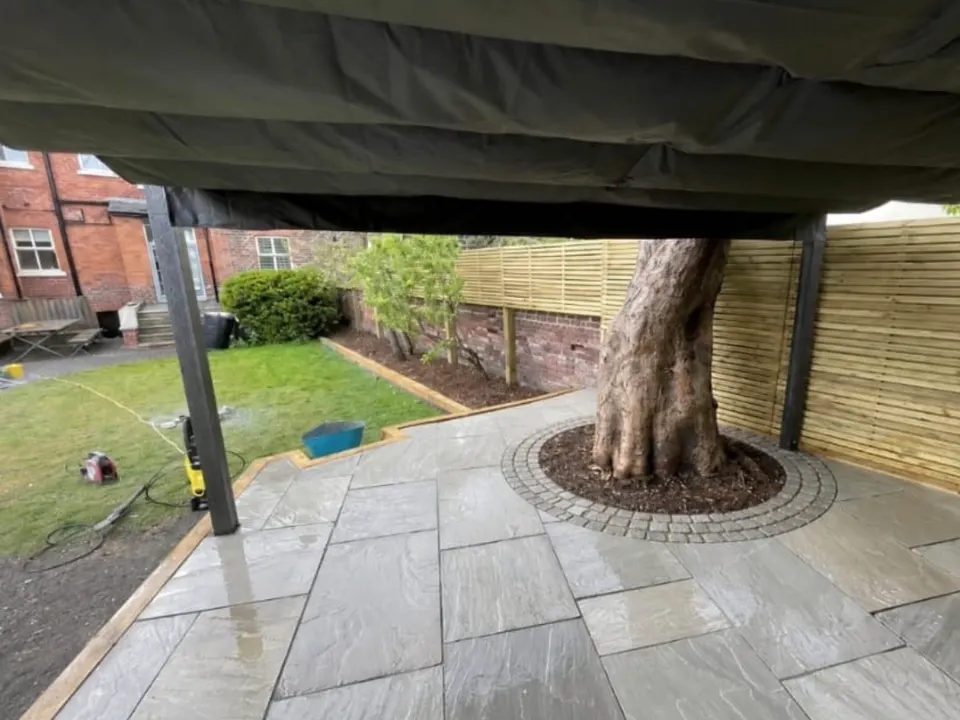
What’s Included
The character is in the pattern and the colour mix. Herringbone locks tight for anything taking weight, basketweave and stretcher bond suit gentler paths and sitting areas, and a contrasting border in charcoal or silver-grey frames a buff or brindle field nicely. We lay samples out dry on the ground first so you see the real blend in daylight, not off a brochure.
- Block paving for drives, paths, patios, steps and edging
- Herringbone, stretcher and basketweave bonds
- Full choice of block colour, size and finish
- Dug out and compacted MOT Type 1 sub-base
- Contrasting borders and edge courses set in concrete
- Sunken or spreading block paving lifted and relaid
- Joints locked with kiln-dried sand
How It Works
Block Paving in Hindley, FAQs
Yes, paths, steps and border edging are everyday block paving work for us across Hindley and Hindley Green. Everything goes on a compacted MOT Type 1 sub-base with a concrete haunch to the edges, which is what stops a path creeping apart or a step working loose over the years.
Often, yes. If the blocks are sound and sitting level, re-sanding with fresh kiln-dried sand brushed into the joints firms the whole area back up. Where sections have sunk we lift just those, correct the base beneath and relay, rather than tearing up paving that is still good.
Yes, and it suits patios well because the small units follow curves and let us work borders, banding and even a circle feature into the design. We lay it to a fall the same way we would flags, so water runs off rather than pooling, and the colour blend can be picked to sit with the house and the planting.
Usually, yes. If blocks have dropped or spread it means the base or the edge restraint has failed, so we lift the affected area, put the base and edges right and relay it properly. Where the joints have simply lost their sand and weeds have taken hold, brushing in fresh kiln-dried sand tightens them back up, though if the blocks have actually moved the base is the real fix.