
Decking in Culcheth
Timber and composite decking supplied and fitted: raised decks, steps and balustrades built on solid subframes that stay level, safe and dry underneath. Around five miles from our Leigh base.
Decking for Culcheth Gardens
Culcheth gardens work hard: kids, dogs, barbecues and half the street round on a sunny Saturday. A well-planned deck takes that traffic better than most surfaces, and it puts the seating where the sun is rather than where the builder left a slab. We fit timber and composite decking across Culcheth and Glazebury, with family-proof detailing as standard.
We cover Culcheth and the surrounding area: Twiss Green, Wigshaw, Fowley Common, Newchurch, Glazebury and beyond (WA3).
Get a Free Culcheth Quote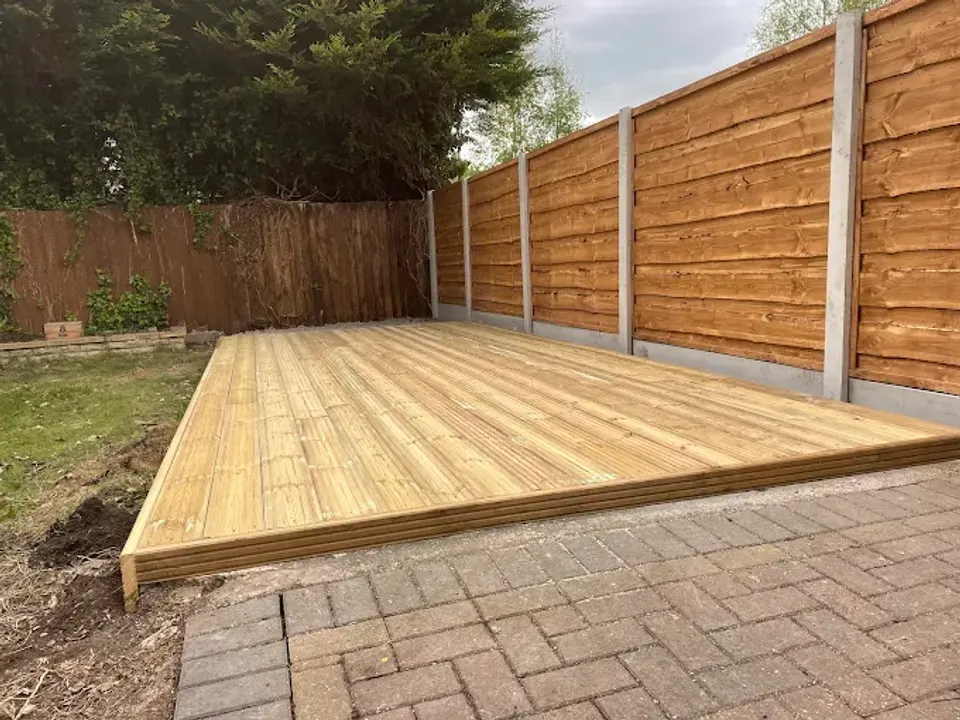
What’s Included
For family gardens we lean towards grooved or textured boards for grip, balustrades with closely spaced spindles where little ones are about, and frames built to take a trampoline-summer of hammering. Composite is popular here for the no-splinter, no-oiling life, but a well-kept timber deck does the job for less.
- Treated timber decking, supplied and fitted
- Composite decking in a range of colours and finishes
- Raised and split-level decks for sloped gardens
- Steps, balustrades and handrails built in
- Solid subframes with membrane and airflow underneath
- Old decking removed and taken away
How It Works
Decking in Culcheth, FAQs
Textured composite or grooved timber for grip, spindle gaps under 100mm on any balustrade, and rounded step nosings. No splinters is the quiet win with composite. We build all of that in as standard when you tell us kids will be using it.
Wherever the sun actually lands. That is the beauty of a deck: it does not have to touch the house. A freestanding platform in the sunny back corner of a Culcheth garden, linked by stepping stones or a path, often gets more use than the patio ever did.
It comes down to budget and appetite for upkeep. Treated timber is cheaper to buy and easy to repair, but needs a clean and re-oil every year or two to stay looking good. Composite costs more up front and then more or less looks after itself. In shaded gardens where timber greens over fast, composite is usually worth the extra.
Yes, and that is where decking beats paving hands down. The frame takes up the slope, so you get a perfectly level surface without moving tonnes of soil. Split-level decks with a step or two between them work well on steeper plots.
Any surface grows algae in a shaded, damp spot. Grooved boards help, composite ranges with textured finishes help more, and an annual wash keeps either surface safe. If the deck is going somewhere that never sees sun, tell us and we will spec the boards accordingly.