
Decking in Ashton-in-Makerfield
Timber and composite decking supplied and fitted: raised decks, steps and balustrades built on solid subframes that stay level, safe and dry underneath. Around five miles from our Leigh base.
Decking for Ashton-in-Makerfield Gardens
Ashton and Garswood gardens are a mix of solid semis and older terraces, and most have one corner that catches the sun long after the rest of the garden has gone cold. A deck built in that corner, rather than defaulting to outside the back door, is the cheapest extension you will ever add to the house. We build timber and composite decks across WN4, an easy run from our Leigh base.
We cover Ashton-in-Makerfield and the surrounding area: Bryn, Garswood, Stubshaw Cross, Town Green, North Ashton and beyond (WN4).
Get a Free Ashton-in-Makerfield Quote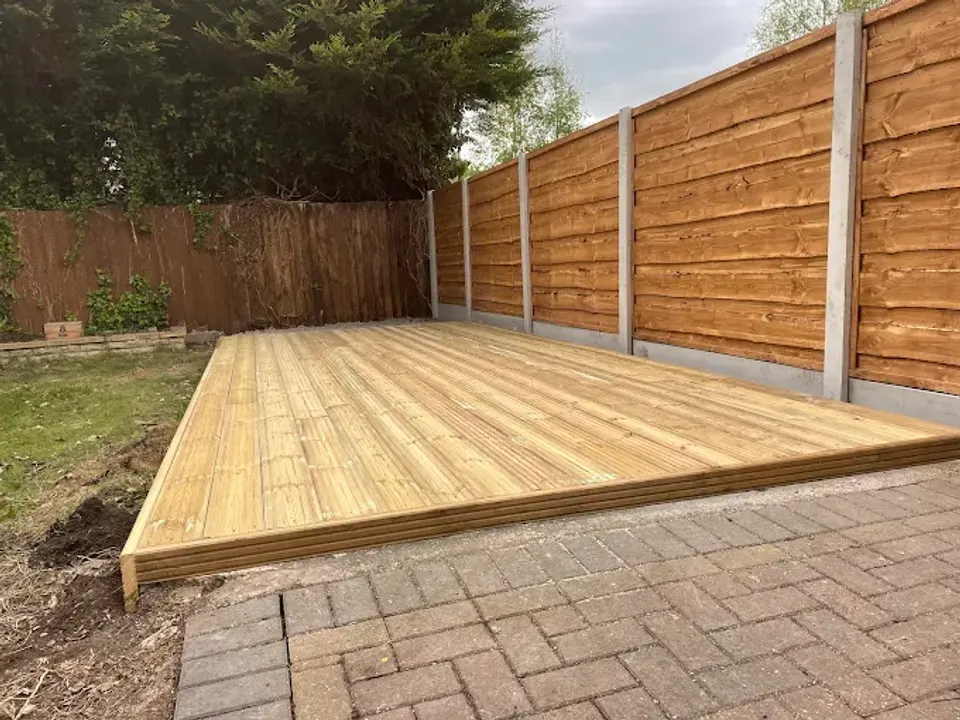
What’s Included
Corner and freestanding decks need the same discipline as any other: posts on pads, a frame at proper centres, membrane against the weeds and air moving underneath. We link them back to the house with stepping stones or a path, add a balustrade where the levels ask for one, and leave the garden tidy.
- Treated timber decking, supplied and fitted
- Composite decking in a range of colours and finishes
- Raised and split-level decks for sloped gardens
- Steps, balustrades and handrails built in
- Solid subframes with membrane and airflow underneath
- Old decking removed and taken away
How It Works
Decking in Ashton-in-Makerfield, FAQs
No, and in plenty of Ashton gardens it should not be. A freestanding deck in the sunniest corner regularly gets more use than a house-side patio that sits in shadow from mid-afternoon. The build cost is much the same either way.
Built on a proper frame and given a wash and an oil every year or two, fifteen years is a fair expectation and plenty go longer. Skip the upkeep and the boards grey and roughen well before the structure fails. Composite pushes past twenty years with next to no effort.
It comes down to budget and appetite for upkeep. Treated timber is cheaper to buy and easy to repair, but needs a clean and re-oil every year or two to stay looking good. Composite costs more up front and then more or less looks after itself. In shaded gardens where timber greens over fast, composite is usually worth the extra.
Yes, and that is where decking beats paving hands down. The frame takes up the slope, so you get a perfectly level surface without moving tonnes of soil. Split-level decks with a step or two between them work well on steeper plots.
Any surface grows algae in a shaded, damp spot. Grooved boards help, composite ranges with textured finishes help more, and an annual wash keeps either surface safe. If the deck is going somewhere that never sees sun, tell us and we will spec the boards accordingly.